Cutting down, lopping and trimming private trees in Moonee Valley is regulated through a Significant Tree Register, a local law covering canopy trees, and state planning provisions. These rules don’t prevent tree works. They exist so that trees providing environmental, cultural or aesthetic value to the community are not removed or damaged without proper consideration.
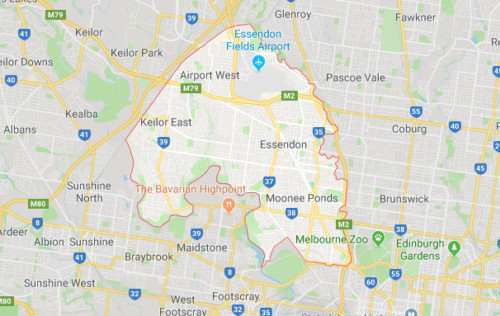
Trees that fall into one of these categories generally need council approval before any work begins. Our crews work across the municipality, from Essendon and Moonee Ponds through to Airport West and Keilor East, and can help you work out what applies to your property before you start.
Request Quote: 131 546
Two Kinds of Canopy Tree
Moonee Valley has used the term canopy tree in its local law since 2018. In September 2025 the Victorian Government introduced a statewide planning provision that also uses the term canopy tree, with a completely different definition and a much lower size threshold.
Both apply to properties in Moonee Valley, and they catch different trees:
Council’s canopy tree (local law): trunk circumference of 1.1 metres or more, measured 1.5 metres up the trunk.
The state’s canopy tree (Clause 52.37): more than 5 metres tall, trunk circumference of more than 0.5 metres measured at 1.4 metres, and a canopy spread of at least 4 metres.
The state threshold is less than half the council one, so a tree can easily fall outside Council’s local law and still need a planning permit under the state provision. Checking one and assuming you’re clear is the mistake worth avoiding here.
Significant and Canopy Tree Protections
Moonee Valley’s tree protections sit under section 4.31.1 of the Activities and General Amenities Local Law 2018, which requires a permit for works to a significant tree or a canopy tree unless the work complies with Council’s Tree and Canopy Protection Guidelines.
Significant trees
Trees added to the Significant Tree Register because of their value to the community. Council assesses nominations against twelve criteria:
- Horticultural or genetic value
- Unique location or context
- Rare or localised distribution
- Particularly old specimen
- Outstanding size
- Aesthetic value
- Curious growth habit
- Historical significance
- Connection to Aboriginal culture
- Outstanding example of species
- Remnant vegetation
- Outstanding habitat
A permit is required to remove, prune, damage, kill or destroy a significant tree, or to allow any of that to happen, and to carry out any works within its tree protection zone.
Canopy trees
Under the local law, a canopy tree is any tree with:
- A total trunk circumference of 1.1 metres or more, measured 1.5 metres along the trunk from the closest point above ground level; or
- Multiple stems with a combined circumference of 1.1 metres or more, measured at the same point; or
- A trunk circumference of 1.5 metres or more measured at ground level
A permit is required to remove, damage, kill or destroy a canopy tree, or to carry out works within its structural root zone.
Council charges an administration fee of $143.00 per application, and this is not refunded even if the assessment finds your tree does not meet the size threshold and no permit was needed. It is worth measuring carefully, or having someone measure for you, before you lodge.
Canopy Trees & The Clause to Look Out For
On 15 September 2025 the Victorian Government introduced Clause 52.37 into every planning scheme in the state. It requires a planning permit to remove, destroy or lop a canopy tree in most residential zones, meaning a tree that is more than 5 metres tall, with a trunk circumference over 0.5 metres measured at 1.4 metres, and a canopy spread of at least 4 metres.
The trigger applies in the Mixed Use, Township, Residential Growth, General Residential, Neighbourhood Residential, and Housing Choice and Transport zones. The Low Density Residential Zone is excluded.
Clause 52.37 does not replace Council’s local law or the Environmental Significance Overlay. All three can apply to the same tree, and you may need approval under more than one. The clause also sets minimum canopy tree numbers per lot for new development, which can mean planting replacement trees as part of an application.
The state government’s guide to the canopy tree provisions covers the exemptions and the treatment of boundary canopy trees.
Planning Schemes and the ESO
Moonee Valley’s significant trees are protected statutorily through the Environmental Significance Overlay, specifically Clause 42.01 of the Moonee Valley Planning Scheme and Schedule 2 to that clause. Trees listed in the schedule need a permit to be removed, or to have branches greater than 10 centimetres in diameter pruned.
Within the ESO, a permit is not required to:
- Prune for maintenance where the branch size is no greater than 10 centimetres in diameter and no more than 10 per cent of the canopy is removed, in accordance with AS 4373-2007
- Remove, destroy or lop vegetation not listed in the table to the schedule
- Remove, destroy or lop vegetation in accordance with a plan approved under a Schedule to the Development Plan Overlay
You can check which controls apply to your address through Council’s planning scheme page or through VicPlan.
Arborist Insights
Removals are only part of what our Moonee Valley crews do. Around 60 per cent of their work is maintenance: pruning, weight distribution and bringing trees back to a safe size. That balance matters for more than appearance.
Trees left to decline through age, disease, damage or neglect become a problem for the people around them. Without regular pruning and trimming, mature trees can threaten residents, pedestrians, passing traffic and wildlife. Overgrown branches shade out the plants beneath them, and where they overhang a roof, falling leaves damage tiles and block drainage. Branches carrying too much of their own weight or foliage can snap in a storm, in high wind, or without any warning at all.
The bigger risk is structural. Overgrown foliage and overweight limbs can unbalance an entire tree, and once a tree has lost its structural integrity, there is often no option left but complete removal. That is usually avoidable, and regular pruning and health assessments help prevent it.
Where removal is the right call, taking out old, sick or damaged trees prevents falling branches and the spread of disease, and clears space for new planting. We remove the stump and the root system as well, then fill the hole with mulch produced on site through our stump grinding service, which supports healthy regrowth in the same spot.
Cutting to the Chase
Moonee Valley regulates private tree works through a combination of local law and planning controls, with the main restrictions falling on significant trees and canopy trees.
Since September 2025 a statewide canopy tree provision has applied on top of those, using the same term with a lower threshold. Working out which of the three applies to your tree is the first step in any major tree works, and getting it wrong can be expensive.
Call your local Jim’s Trees on 131 546 or request a free quote online.