Boroondara has some of the strictest tree protection rules in Melbourne, and they got stricter in 2024. Council actively enforces them: between 2021 and 2025 there were 72 prosecutions for illegal tree works, and 44 of those were in just three suburbs, Balwyn North, Kew and Camberwell.
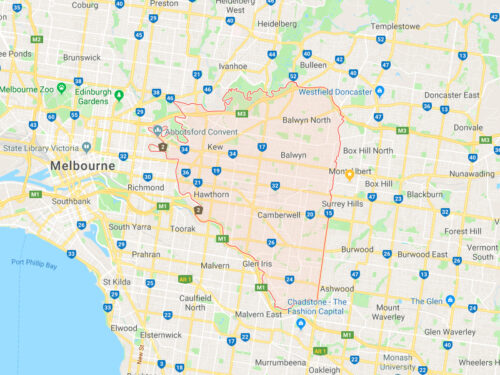
That makes it worth knowing where you stand before starting any work. Our crews operate across the municipality, from Hawthorn and Kew through Camberwell, Balwyn, Glen Iris and Surrey Hills, and can tell you what applies to your property before we cut anything.
Request Quote: 131 546
Why Boroondara Protects Its Trees
Boroondara is a leafy municipality by Melbourne standards, but its canopy is unevenly spread and shrinking. A 2022 canopy study found cover ranging from around 31 per cent in Canterbury down to around 22 per cent in Hawthorn East.
Roughly 700 trees on private land and 800 on public land are removed each year due to age, poor health, structure, or location. Council plants about 2,000 replacements annually, but a new tree takes decades to deliver the canopy of a mature one it replaced.
Council’s Canopy Tree Strategy targets 27 per cent canopy cover across Boroondara by 2040, and the tightened local law is part of how it intends to get there.
Which Trees Are Protected
Boroondara protects trees on private land under its Tree Protection Local Law and, since September 2025, under Clause 52.37 of the planning scheme as well. Three categories matter.
Canopy trees
A tree with a trunk circumference of 110cm or more, measured 1.4 metres above ground level. For multi-stemmed trees, measure the total circumference of all stems at the same height.
You need a permit to remove a canopy tree, or to carry out works less than 2 metres from its trunk. This applies even if the tree is dead or is a recognised weed species, which catches a lot of people out.
Boundary canopy trees
Canopy trees within 6 metres of the narrowest street frontage, or 4.5 metres of the rear boundary. These are protected under Clause 52.37 of the Boroondara Planning Scheme, and removing one requires a VicSmart planning permit rather than a local law permit.
Significant trees
Trees on the Significant Tree Register, identified for their size, age, rarity, ecological value or cultural and historical significance. A significant tree can be a single tree, an avenue or a hedge, on private or public land. You need a permit to remove one, to prune any branch greater than 5cm in diameter, or to carry out works within its Tree Protection Zone.
Council also runs a free online tool, myLot, which checks a property address against both the local law and the planning scheme and explains why a permit is or is not required. It is a guide rather than a formal decision, but it is the quickest way to find out where you stand.
The Clause To Be Aware of And How The Controls Stack
On 15 September 2025 the Victorian Government introduced Clause 52.37 into every planning scheme in the state. It requires a planning permit to remove, destroy or lop a canopy tree in most residential zones, meaning a tree more than 5 metres tall with a trunk circumference over 0.5 metres measured at 1.4 metres, and a canopy spread of at least 4 metres.
In Boroondara, this sits alongside the local law rather than replacing it, and the two use different thresholds. Council’s local law protects trees with a circumference of 110cm. The state provision catches trees from 50cm. A tree can therefore sit below Council’s threshold and still need a planning permit.
If your property also falls within a Significant Landscape Overlay, Vegetation Protection Overlay or Environmental Significance Overlay, those controls apply too. You may need approval under more than one.
Applying For A Permit
Where a local law permit is needed, applications go to Council through the tree works permits process. An arborist will visit the property to inspect the tree and assess the request. Council receives around 1,000 applications a year and roughly 60 per cent result in a permit being issued, usually with conditions attached, so a well-prepared application matters.
Processing takes around 10 days. A successful permit is valid for 12 months. If your application is refused, you have 60 days to request an internal review. Pruning permits cost around $40 per tree and removals around $80 per tree.
For trees on Council land or on a neighbouring property, there is a separate request process. Note that if a neighbour’s tree is protected and you want to prune the part overhanging your side, or work within its 2 metre protection zone, you still need a permit, and your application has to include the tree owner’s written permission.
Penalties
Boroondara increased its penalties under the 2024 local law. The maximum financial penalty for illegal tree works, damage or removal is $3,840, adjusted annually with CPI, which is the highest available under the Local Government Act 2020. Council applies the maximum penalty units for nearly all tree offences.
Liability is not limited to the property owner. Where a contractor carries out unauthorised works, both parties can be penalised, which is one reason to use an operator who checks the permit position before quoting.
Alternatives to Removal
Removal is not always the answer, and in Boroondara it is often the hardest option to get approved. Three alternatives are worth considering first.
Pruning
Uneven weight distribution is one of the main reasons trees fail, and it is frequently the result of poor pruning earlier in the tree’s life.
Regular pruning to Australian Standard AS 4373 keeps a tree healthy, keeps it safe, and often removes the need for a removal application altogether. Most trees benefit from yearly attention, though the right time of year varies by species.
Lopping
Removing specific limbs protects the property below from falling branches and can improve the tree’s structure.
Gums are particularly worth watching here. They are brittle, and a healthy-looking gum can shed a limb in a storm or a sudden temperature change with no warning at all. Palms, by contrast, handle weather far better and rarely fail outright.
Bracing
Roping and bracing a tree so that failing branches stay caught rather than falling can save a tree that would otherwise have to come out, along with the shade and the character it gives a property. It is not a set-and-forget solution though.
Braces need periodic tightening and post-storm checks, so there is an ongoing cost and responsibility. Whether it suits depends on the tree and on how much maintenance you are prepared to take on.
The Jim’s Approach
Safety comes first on every job. Before any work starts, our crews complete a Job Safety Analysis to identify hazards in the tree and its surroundings, then hold a toolbox meeting on site to agree the safest approach for that specific tree.
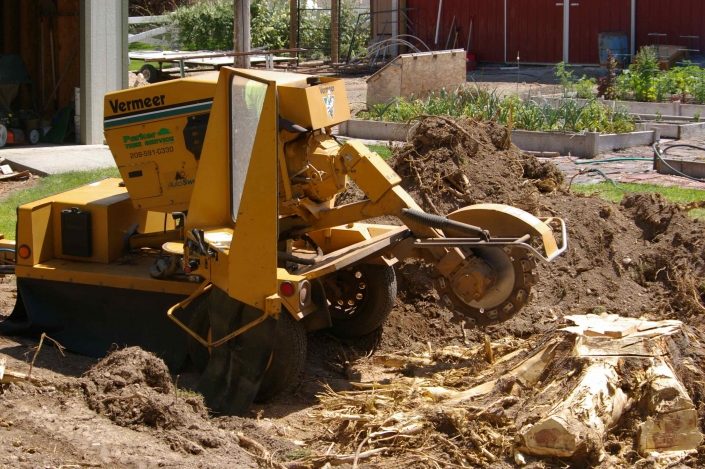
When a job is near a road, we deploy signs and cones to manage traffic and pedestrians, and a section of road may need to be closed so nobody passes through the drop zone. The job isn’t finished when the tree is down. We clear the site properly, including the stump and root system where that is part of the work.
Common Tree Types
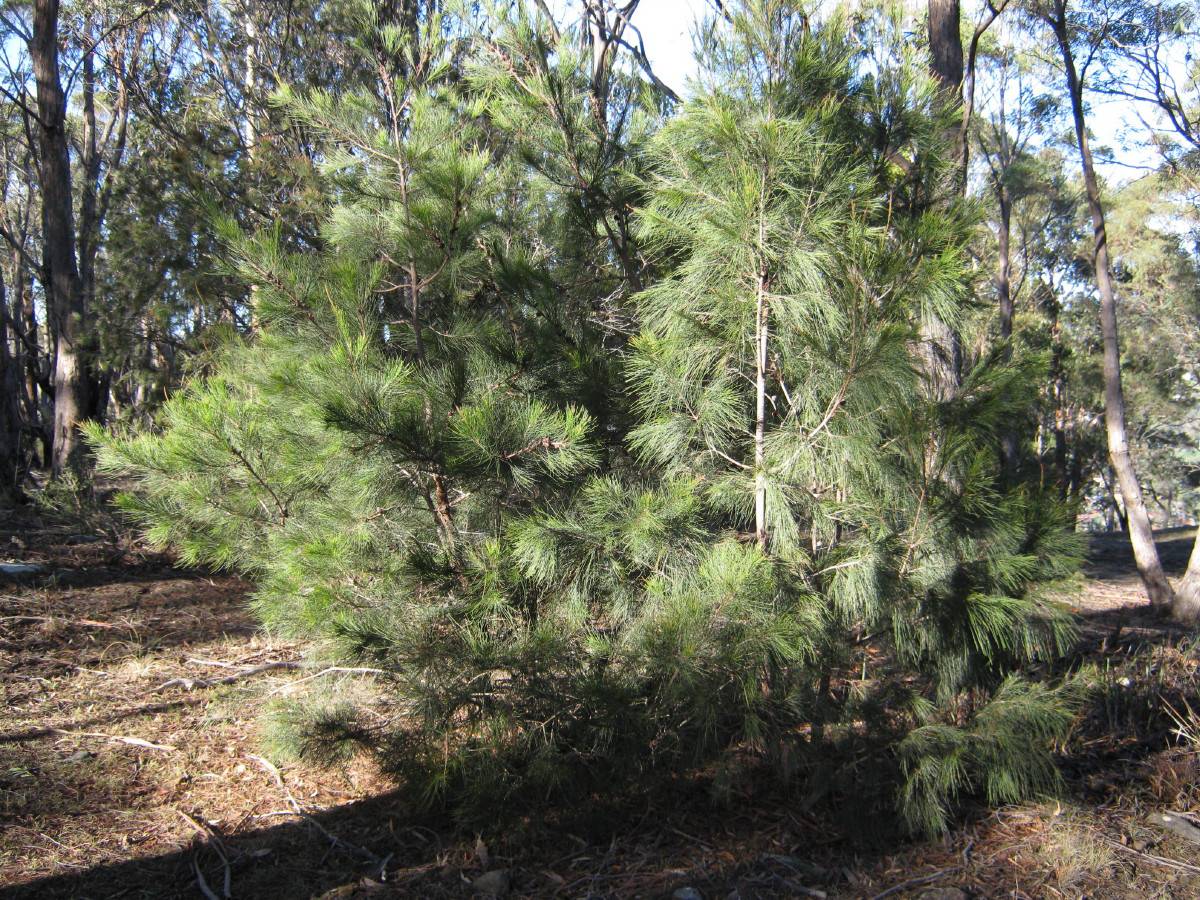
Species indigenous to the Boroondara area include:
- Black she-oak (Allocasuarina littoralis)
- Blackwood (Acacia melanoxylon)
- River red gum (Eucalyptus camaldulensis)
- Yellow box (Eucalyptus melliodora)
- Yellow gum (Eucalyptus leucoxylon subsp. connata)
Cutting to the Chase
Boroondara regulates private tree works through its Tree Protection Local Law, the Significant Tree Register and, since September 2025, Clause 52.37 of the planning scheme. The thresholds differ, penalties run to $3,840, and Council prosecutes. Checking the position before you start is not optional here.
Call your local Jim’s Trees on 131 546 or request a free quote online.