
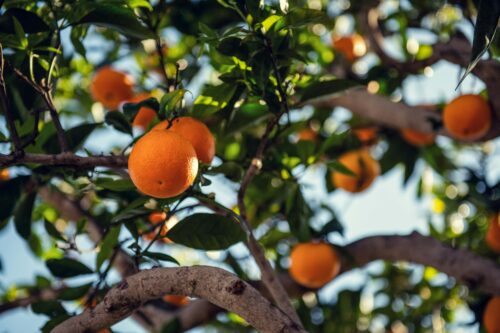
In Victoria, the main prune for citrus trees is late winter to spring, soon after you have picked the fruit. In frost-prone areas, wait until late spring, once the risk of frost has passed.
Citrus gall wasp changes the timing. Agriculture Victoria reports the pest has spread throughout the eastern states, including Victoria, and recommends pruning out galls from April to June. It also warns that pruning in winter beyond June encourages the fresh spring growth the wasp prefers.
You do not need to prune citrus to produce more or better fruit. NSW Department of Primary Industries (NSW DPI) notes that, apart from removing suckers and shoots from the rootstock and trunk, there is no need to prune a citrus tree until dead wood has to be removed. Most pruning is about keeping the tree healthy, easy to harvest and a manageable size.
The Bottom Line
- Main prune: late winter to spring, after harvest and before bud break
- Frost-prone areas: late spring, once the frost danger is over
- How much: no more than about 20% of the canopy in a year
- What to remove: dead, damaged and diseased wood, crossing branches, low branches touching the ground, and shoots from the rootstock
- Citrus gall wasp: prune out galls from April to June, and never put them in household waste, green verge collections or garden bags
Victorian Citrus Pruning Calendar
| When | Job |
|---|---|
| April to June | Prune out citrus gall wasp galls |
| Mid to late winter | Slice open active galls instead of pruning them |
| Late winter to early spring, after harvest | Main prune |
| Late spring | Main prune in frost-prone areas |
| October to November, after fruit set | Skirt Valencia oranges and summer navels |
| Early summer | Light branch pruning to reduce a heavy crop |
| Late summer to mid-autumn | Thin regrowth from the main prune |
| Spring | Skeleton pruning a neglected tree |
When to Prune Citrus in Victoria
The main prune: late winter to spring, after harvest
The Western Australian Department of Primary Industries and Regional Development (DPIRD) says the best time to prune is soon after harvest in winter to early spring, before bud break. Pruning after harvest prevents unwanted fruit loss. NSW DPI advises pruning in spring when the danger of frosts is over. ABC Gardening Australia recommends late winter to early spring, when flowers are starting to form.
Because flowers are forming at this time, do not trim the whole outer canopy. Horticulturist Phil Dudman, writing in ABC Organic Gardener, suggests taking out one or two of the longest branches each year and leaving the rest to flower and fruit.
Frost-prone areas: late spring
Gardening Australia notes that citrus tolerate only light frost, and NSW DPI notes that lemons are more susceptible to frost than oranges. Gardening Australia recommends holding off until late spring in frosty areas.
Trees with citrus gall wasp: April to June
Agriculture Victoria says the best time to prune out galls is from April to June. It warns that pruning in winter beyond June causes the tree to grow vigorously in spring, producing a flush of new foliage that the gall wasp prefers. It also warns that yearly pruning regimes that encourage fresh growth can keep the gall wasp cycle going, because the wasps often stay on the same tree.
Late varieties: expect some fruit loss
Late varieties such as Valencia oranges and summer navels can carry two crops at once. WA DPIRD notes that when you prune these trees, some of the new crop will unavoidably be lost. Skirting is also harder while the tree is carrying two crops, and WA DPIRD suggests skirting these varieties in October or November, after fruit set.
Light trims at harvest
Gardening Australia notes citrus can be trimmed lightly at harvesting time if needed.
Early summer: reducing a heavy crop
NSW DPI’s guide to hand pruning citrus notes that light branch pruning in early summer can reduce an excessive crop load.
Late summer to autumn: thinning regrowth
Pruning triggers new growth. WA DPIRD recommends dealing with this regrowth several months after pruning, in late summer to mid-autumn, when it is about 30 cm long. On Gardening Australia, Tino Carnevale thins regrowth in autumn, six months after cutting back the tops of the main branches, to keep good airflow through the tree.
Renovating a neglected tree: spring
NSW DPI describes skeleton pruning, a severe cutting back of a neglected tree, as a spring job.
How often
NSW DPI’s guide to hand pruning citrus recommends pruning annually to remove unproductive branches. Gardening Australia recommends removing no more than about 20% of the canopy each year. If your tree has citrus gall wasp, keep Agriculture Victoria’s warning about yearly pruning regimes in mind.
How to Prune a Citrus Tree
What you need
- Sharp secateurs
- Loppers for thicker branches
- Pruning saw for larger limbs
- Gloves and eye protection
Step 1: Remove dead, damaged and diseased wood
Cut out anything that is dead, damaged or diseased. Make clean cuts and do not leave stubs. Also remove branches that cross and rub against each other, as the bark at rubbing points eventually wears and exposes the inner wood to infection.
Step 2: Remove suckers from the rootstock
Common citrus varieties are grown by budding the chosen variety onto a separate rootstock. Shoots that grow from the rootstock are not the variety you planted. NSW DPI recommends removing suckers and shoots from the rootstock and trunk.
Step 3: Lift the skirt
Skirting means removing the lowest branches so they do not touch the soil. This helps maintain airflow, lets more light reach underneath the tree and reduces the potential for fungal disease. The right height depends on the species, size, condition and position of the tree. Branches also drop lower as fruit develops, so allow extra clearance. Learn more about canopy lifting.
Step 4: Thin the canopy
Thinning means removing selected branches so light and air can move through the canopy. For citrus, remove the shaded inside twigs and limbs. NSW DPI says this opens the centre of the tree and reduces the risk of fungal diseases such as melanose. Thinning also takes weight off the branches and makes the tree less hospitable to rodents and insects.
Step 5: Control the height and spread
Cut back tall upright branches and side shoots that grow beyond the size and shape you want. Remove high branches that will bear fruit you cannot easily pick. Gardening Australia recommends removing no more than about 20% of the canopy in a year, which keeps the tree in shape without costing you a crop.
Step 6: Remove or shorten water shoots
WA DPIRD recommends removing or shortening water shoots to prevent them from becoming dominant.
Citrus Gall Wasp in Victoria
Citrus gall wasp is an Australian native insect whose natural host is the Australian finger lime. Agriculture Victoria notes it has adapted to cultivated citrus such as lemons and grapefruit, and has spread throughout the eastern states, including Victoria. The wasp lays its eggs in soft young stems, causing them to swell.
Gall wasp life cycle
| Stage | When |
|---|---|
| Adult wasps emerge | Mid-October to mid-December |
| Peak emergence | Late October to mid-November |
| Larvae feed inside the stem | About 9 to 10 months |
| Galls start to become visible | April |
| Galls easy to see | By June |
Source: Agriculture Victoria. Emergence dates are for southern Australia.
Two ways to deal with galls
| Method | When | How |
|---|---|---|
| Prune out galls | April to June | Cut off the affected stems |
| Slice open galls | Mid to late winter | Slice the top off one side of each active gall with secateurs, a sharp knife or a potato peeler, blade facing away from your body |
Agriculture Victoria says slicing exposes the larvae to air and kills them without causing lasting damage to the tree.
Tiny pinholes on a gall mean the wasps have already emerged, so there is no need to remove it.
Agriculture Victoria also advises against heavily fertilising citrus in winter or spring, as this promotes the fresh growth the wasp prefers.
How to get rid of galls
Do not put gall prunings in normal household waste, a green verge collection or garden bags, as this spreads the pest. Agriculture Victoria recommends one of two methods:
- Seal them in a plastic bag and leave it in the sun to bake for a month
- Incinerate them
If you burn them, follow Victoria’s burning-off rules. The CFA says you need a written permit to burn off during the Fire Danger Period, and burning off on a Total Fire Ban day is illegal. Some councils restrict burning off to certain days or prohibit it entirely, so check your council’s local laws first.
Pruning Young Citrus Trees
WA DPIRD recommends not allowing branching on young trees until they reach 50 to 60 cm, with about 20 cm of straight trunk above the bud union.
Reviving a Neglected Citrus Tree
For badly neglected trees, NSW DPI describes skeleton pruning. This is a severe cutting back in spring: remove all the leaves and twigs and cut the main branches back so only the tree’s framework remains. The exposed limbs then need protecting from sunburn. WA DPIRD recommends white acrylic paint on exposed trunks and limbs where sunburn is a risk.
A tree pruned this hard needs time to recover.
Common Citrus Pruning Mistakes
| Mistake | Why it is a problem |
|---|---|
| Pruning while frosts are still around | Citrus tolerate only light frost |
| Pruning a gall-affected tree in winter after June | Encourages the spring growth the wasp prefers |
| Removing too much at once | Leaves are the manufacturing part of the plant, and removing too much canopy reduces tree growth |
| Giving the tree an all-over haircut | Citrus flowers and fruit form on the ends of the branches |
| Putting gall prunings in household waste, green verge collections or garden bags | Spreads the pest |
| Leaving rootstock suckers on the tree | They are not the variety you planted |
Tips for Success
- Prune lightly rather than hard
- Use sharp tools so you can make clean cuts without leaving stubs
- Check for galls from April, when they start to become visible
When to Call a Professional
You can prune a small citrus tree yourself. It is worth calling an arborist when:
- The tree is too tall to prune safely from the ground
- Large limbs need removing
- The tree is badly overgrown and needs renovating
- Branches are close to power lines, roofs or fences
- You have several trees to prune
Jim’s Trees arborists can help with tree pruning in your area. For more on pruning, see our guides to tree pruning techniques and types of pruning cuts, or find out how much tree pruning costs.
Final Answer
In Victoria, prune citrus trees in late winter to spring, soon after harvest, and wait until late spring in frost-prone areas. Remove no more than about 20% of the canopy each year, and focus on dead, damaged and diseased wood, rootstock suckers, low branches touching the ground and overly tall growth.
If your tree has citrus gall wasp, prune out the galls from April to June, or slice them open in mid to late winter, and keep the prunings out of household waste, green verge collections and garden bags. For large, overgrown or hard-to-reach trees, call a professional arborist.